Spider Exterminator in Charleston, WV
South Hills basements and steep hillside yards collect webs where river humidity and runoff keep harborage damp. One phone call sorts the activity, access points, and treatment size.
Click Here to Call (888) 510-9023A real person answers · No forms · No waiting on a quote email
- County
- Kanawha County
- Region
- West Virginia
- Conditions
- Humid summers, heavy Appalachian rain, steep slopes, river flooding, and freeze thaw cycles complicate work
Plan
The right visit for the job
For Charleston homes with basement activity, hillside entry points, or several webbed areas, the technician may recommend a targeted treatment or whole-home treatment after hearing the details.
Quote
A straight quote
The exact quote is given on the call, based on treatment size, activity, access, materials, and time on site.
Time
A visit time
The visit time is set on the call around your Charleston property access and household schedule.
Services
Spider Exterminator Services in Charleston
Charleston properties can move from damp basements to steep yards within one job. Homes near the Kanawha River may have exterior webs around foundations and porches, while older houses in South Hills or Edgewood may have cracks, utility openings, and storage areas that need attention. Treatment is sized around where spiders are active, how they enter, and how much of the property needs inspection.
Residential spider treatment
Homes in Charleston neighborhoods receive treatment sized to basement activity, porch webs, crawl spaces, and access points around the foundation.
Indoor spider control
Indoor work can address webs and harborage in Charleston basements, utility rooms, garages, attics, and rooms beside exterior walls.
Exterior spider control
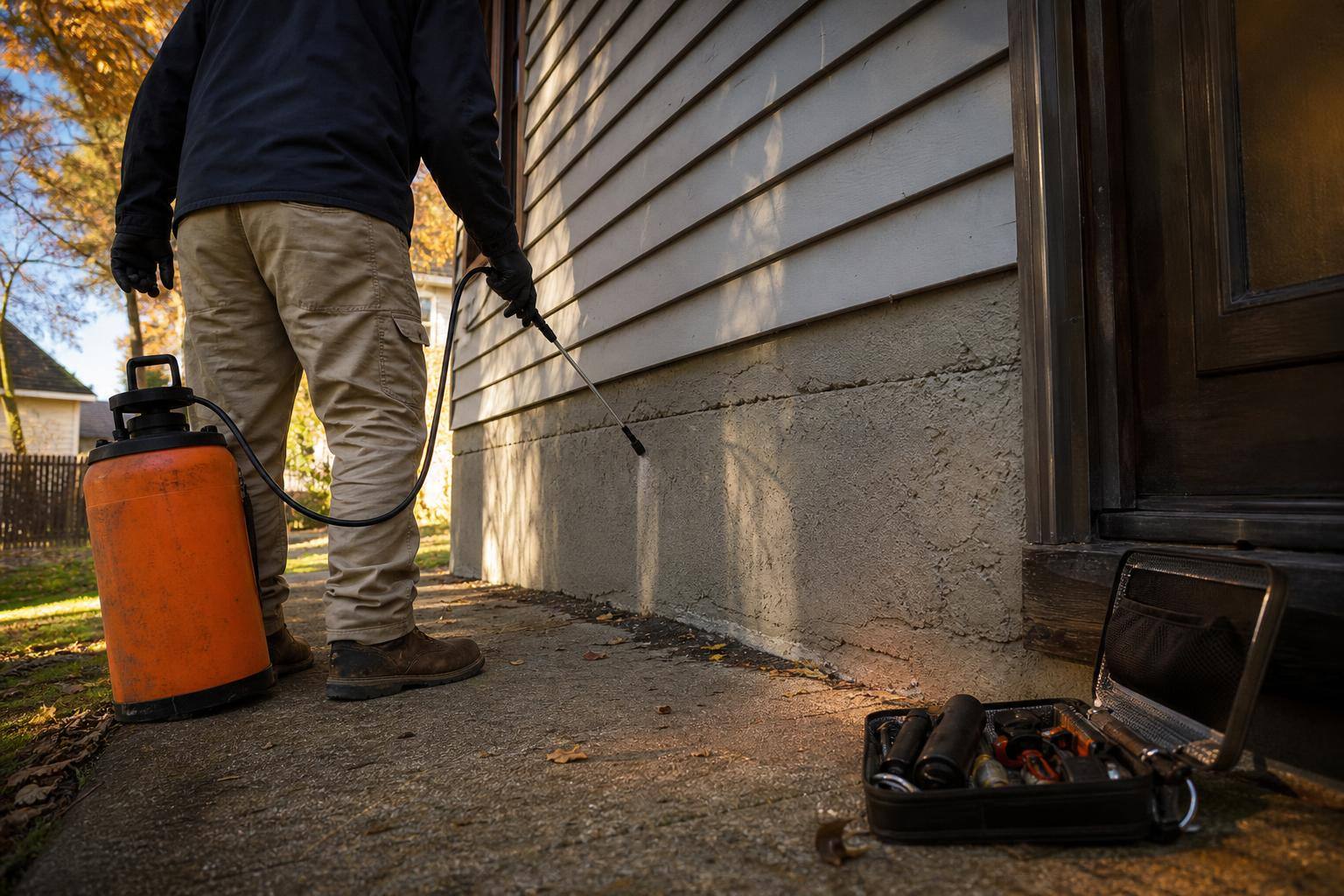
Exterior treatment focuses on Charleston foundations, porch edges, window frames, eaves, and yard-side entry points where webs return.
Web removal service
Web removal clears visible buildup from porches, siding, garages, and entry areas in Charleston, followed by attention to the activity producing it.
Recurring spider prevention
Recurring protection suits Charleston properties where humid summers, river moisture, or repeated exterior activity bring webs back around the structure.
Apartment spider treatment
Apartment treatment can focus on an individual unit, shared access points, utility areas, or exterior sections in Charleston buildings.
Commercial spider control
Charleston commercial sites may need treatment around loading areas, doors, lights, storage rooms, foundations, and other high traffic access points.
Sizes
Spider Exterminator Options Available in Charleston
The targeted treatment fits many Charleston jobs because activity often centers on a basement, garage, porch, or a few entry points. Broader work makes more sense when webs appear across the structure or several indoor areas are involved.
Which option fits common Charleston projects
Schedule Charleston spider treatment
Click Here to Call (888) 510-9023Cost
What Affects Spider Exterminator Cost in Charleston
The exact quote is given on the call after the technician understands the spider activity and property. Cost depends on the type and size of treatment, indoor and outdoor areas, parts and materials, time on site, distance, access, and after-hours work.
Treatment size
A basement corner differs from a whole Charleston home with attic, foundation, porch, garage, and several active entry points.
Access and distance
Steep South Hills driveways, narrow access, crawl spaces, river-side properties, and travel across Kanawha County can change preparation and time.
Parts and materials
The quote accounts for treatment materials and any parts needed to address the particular activity or access areas identified during the job.
Site conditions
Heavy rain, flood-prone ground, storage blockage, indoor activity, exterior webs, and after-hours work can affect the work plan and cost.
Describe every active area, access concern, and prior treatment on the call. The quote is set before the visit from those details, so the work plan and expected charges are not based on a vague description.
What goes in
Types of Work We Handle
Indoor Spider Activity
This covers spiders or webs in basements, attics, garages, utility rooms, and living areas, including a Charleston basement load after heavy Appalachian rain.
Exterior Spider Webs
Exterior work addresses webs around foundations, porches, lights, doors, and siding at Charleston homes, apartments, and commercial buildings.
Recurring Spider Infestations
Recurring protection suits properties with renewed activity after treatment, especially Charleston river-side homes and shaded hillside structures with persistent exterior harborage.
Not accepted. The service does not cover unrelated pests, hazardous materials, inaccessible areas, structural repairs, or items and conditions the technician cannot safely treat.
How to protect your home in Charleston
Projects
Spider Exterminator for Different Projects
Basement Spider Treatment Spider Exterminator
Charleston basements can hold webs near utility lines, foundation walls, and stored items. Treatment is sized after those areas and entry points are evaluated.
Garage Spider Treatment Spider Exterminator
Garage doors and storage edges create common access points in Charleston homes. The work can focus on active webs, corners, and the path into the house.
Attic Spider Treatment Spider Exterminator
Attic treatment addresses activity around vents, roofline openings, insulation edges, and stored belongings in Charleston houses with difficult upper-level access.
Home Entry Spider Control Spider Exterminator
Entry control focuses on Charleston doors, porch lights, window edges, and foundation gaps where spiders can move from exterior webs into the home.
Web Removal Service Spider Exterminator
Web removal suits porches, eaves, garages, and siding in Kanawha County, while the treatment plan addresses activity that keeps rebuilding the webs.
Apartment Spider Treatment Spider Exterminator
Charleston apartment work can cover a unit, shared utility opening, balcony, or exterior section, depending on where activity is visible and accessible.
Commercial Building Spider Control Spider Exterminator
Commercial buildings along Charleston corridors may need attention around service doors, loading areas, exterior lights, storage rooms, and foundations.
How it works
How Spider Exterminator Works in Charleston
Call For Spider Help
A real person takes the booking by phone and records the Charleston property type, active areas, access concerns, and preferred visit timing.
Describe Spider Activity
Explain where webs or spiders appear, how often they return, and whether basements, crawl spaces, garages, attics, or yards are involved.
Choose A Treatment Plan
The technician matches the activity to an inspection visit, targeted treatment, whole-home treatment, or recurring protection.
Complete Spider Control
The technician works through the agreed areas, addressing active locations, webs, exterior foundations, and likely access points as the plan requires.
Weather in Charleston
Charleston's humid summers support exterior web activity, while heavy Appalachian rain can drive spiders toward sheltered walls, basements, and garages. River flooding can limit access or change where activity is found. Freeze thaw cycles may open small gaps around foundations and entry areas, so weather and ground conditions are reviewed before work.
Treatment area access
Treatment may take place in crawl spaces, on slabs, in basements, utility rooms, garages, porches, foundations, and yards. Steep Charleston lots, flood-prone ground, narrow side access, stored belongings, locked gates, and parked vehicles can limit safe movement and should be described on the call.
Discuss Charleston web activity
Click Here to Call (888) 510-9023Permits
Spider Exterminator Permits and Access Rules in Charleston
Access rules
Spider treatment at a private property generally does not involve a street permit, but work affecting public space, street placement, or a government property boundary may require direction from the City of Charleston or Kanawha County. The call covers the property situation and who must arrange any required approval or inspection.
Landlord and HOA requirements
Some Kanawha County homeowners associations, covenants, landlords, and apartment managers set rules for exterior treatment, notices, access, or visible equipment. Check those requirements before the visit and have the responsible contact available on the call.
What the work area needs
Clear access to the active area, utility shutoffs, crawl space doors, basement stairs, and exterior foundations. Provide safe parking for the work vehicle, keep pets and people clear, and account for wet ground, flooding, steep slopes, or freezing conditions.
Timing
Seasons, Weather and the Best Time to Call in Charleston
Spider activity in Charleston often becomes more noticeable during humid summer weather, when exterior webs build around lights, porches, and foundations. Heavy rain can move activity toward sheltered interiors. Autumn cooling may push spiders toward garages, basements, and utility areas, while winter activity is usually tied to protected indoor spaces and access conditions.
Summer webs and humidity
Warm, humid Charleston weather can increase web buildup around porches, doors, lights, and shaded foundations. Rain runoff and river-side moisture make exterior access and the condition of the ground part of the treatment plan.
Autumn entry activity
As temperatures drop, spiders may show up more around garages, basements, attics, and utility openings. Freeze thaw cycles can also expose foundation gaps that need attention during the visit.
Service area
Spider Exterminator Areas We Serve
Service covers Charleston neighborhoods and settings including South Hills, Kanawha City, Edgewood, the West Side, downtown, and homes along the Kanawha River. Work is also available across Kanawha County, with nearby service discussions for properties outside Charleston based on access, distance, and the treatment required.
Charleston is part of our Kanawha County coverage, and we also serve the neighboring communities below.
Why Call a Spider Exterminator in Charleston?
Charleston jobs can change sharply from a river-level lot to a steep South Hills driveway. That affects where a technician parks, how exterior foundations are reached, and whether basements, crawl spaces, porches, and yards can be checked as one treatment area.
Heavy Appalachian rain, humid summers, flood-prone ground, and freeze thaw movement create different spider conditions across Kanawha County. The treatment plan is built around the actual structure, its access points, and the areas where webs or spiders keep returning.
Click Here to Call (888) 510-9023FAQs
Spider Exterminator FAQs
How much does spider extermination cost in Charleston?
The exact quote is given on the call. Cost depends on the treatment tier, property size, indoor and exterior areas, activity level, parts and materials, time on site, distance, access, and after-hours work. Describe the basement, garage, porch, attic, or foundation areas involved so the quote reflects the actual Charleston job.
Which Charleston spider treatment do I need?
A targeted treatment fits activity limited to a few areas, while a whole-home treatment suits indoor activity combined with exterior foundations or several access points. An inspection visit can sort out uncertain activity in a garage, basement, or attic. Recurring protection fits properties where webs repeatedly return.
How soon can someone come for spider control in Charleston?
The visit time is set on the call, and same-day or next-day availability can be discussed without being promised. Have the property address, active areas, access details, and preferred timing ready so the dispatcher can record the job accurately.
What does Charleston spider treatment cover?
Treatment can cover indoor activity, exterior webs, active harborage areas, common entry points, foundations, porches, garages, basements, attics, utility rooms, and recurring exterior activity, depending on the selected tier. The specific areas are established from the property details and treatment plan.
What does spider control not cover?
Spider control does not cover unrelated pests, hazardous materials, structural repairs, inaccessible areas, or conditions that cannot be treated safely. It also does not assume every pest found in a Charleston basement is included, so identify any other activity separately on the call.
Does Charleston spider treatment need a permit or inspection?
Private spider treatment generally does not need a permit, but work involving public space, street placement, or government property may require direction from the City of Charleston or Kanawha County. The property situation is reviewed on the call, including who handles any required approval or inspection.
Do I need to leave my Charleston home during treatment?
The technician explains the access and safety requirements for the selected treatment. People and pets should stay clear of active work areas, while basements, crawl spaces, utility rooms, garages, and exterior foundations need safe access. Follow the instructions given for the specific property.
What should I have ready when booking Charleston spider control?
Have the property address, neighborhood, building type, rooms or exterior areas affected, recent web locations, prior treatment details, pets, access restrictions, and preferred visit timing ready. Mention steep drives, flood-prone ground, locked gates, crawl spaces, and parking limitations.
Does Charleston weather affect spider treatment?
Yes, humid summers, heavy rain, river flooding, and freeze thaw cycles can change spider locations and exterior access. Rain may move activity toward basements or sheltered walls, while wet or frozen ground can limit foundation and yard work. Weather conditions are considered when the visit is arranged.
Why do spiders keep returning near Charleston river homes?
River moisture, humid air, exterior lighting, sheltered porches, foundation gaps, and nearby vegetation can keep creating favorable web locations. Treatment may need to address both indoor activity and exterior foundations, with recurring protection considered when webs return after the initial work.